{domain:"www.qualitydigest.com",server:"169.47.211.87"} Skip to main content

        
User account menu
Main navigation
  • Topics
    • Customer Care
    • Regulated Industries
    • Research & Tech
    • Quality Improvement Tools
    • People Management
    • Metrology
    • Manufacturing
    • Roadshow
    • QMS & Standards
    • Statistical Methods
    • Resource Management
  • Videos/Webinars
    • All videos
    • Product Demos
    • Webinars
  • Advertise
    • Advertise
    • Submit B2B Press Release
    • Write for us
  • Metrology Hub
  • Training
  • Subscribe
  • Log in
Mobile Menu
  • Home
  • Topics
    • Customer Care
    • Regulated Industries
    • Research & Tech
    • Quality Improvement Tools
    • People Management
    • Metrology
    • Manufacturing
    • Roadshow
    • QMS & Standards
    • Statistical Methods
    • Supply Chain
    • Resource Management
  • Login / Subscribe
  • More...
    • All Features
    • All News
    • All Videos
    • Contact
    • Training

Scribing for New Heights

Using a height gage is simple. Here’s how.

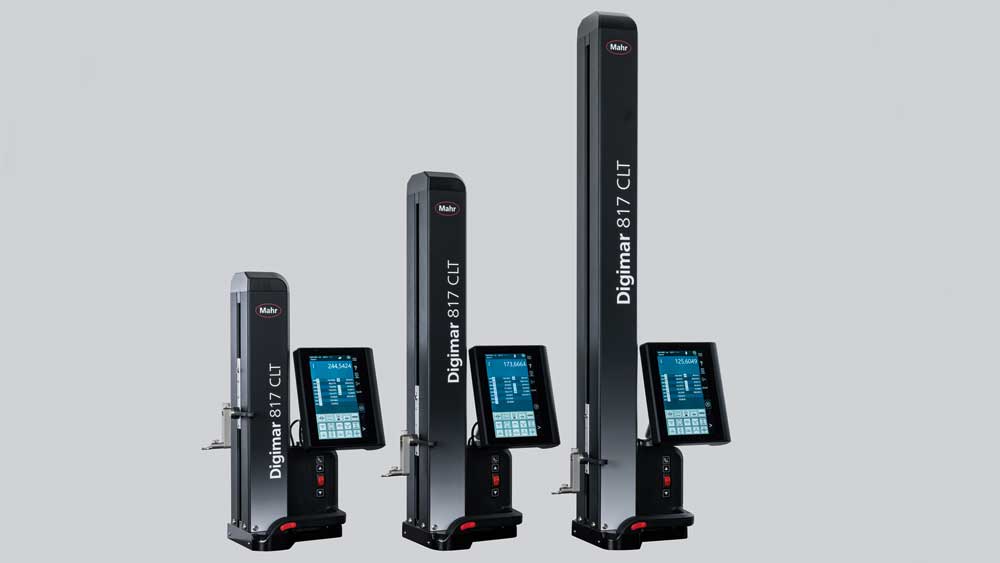
Mahr Digimar 817 CLT height gages: 350 mm, 600 mm and 1,000 mm

George Schuetz

Mahr Inc.

Mon, 01/06/2025 - 12:02
  • Comment
  • RSS

Social Sharing block

  • Print
Body

The need for long-range height measurements has been around since the principles of layout work became a fundamental requirement in machine shops.

ADVERTISEMENT

The first step in the manufacturing process is to lay out a piece by transferring a design or pattern to a workpiece. This is performed in almost all small shops, large manufacturing plants, and even by home hobbyists. The process may be used to begin a prototype piece or an emergency replacement part. The common tools for layout work include a surface plate, a surface gage with scriber or dial indicator, and a long-range height gage.

As with most inspection, the surface plate provides a reference plane for the part and the height gage. Height gages are used to set and mark a certain height on the workpiece, or to measure the piece after it has been machined.

 …

Want to continue?
Log in or create a FREE account.
Enter your username or email address
Enter the password that accompanies your username.
By logging in you agree to receive communication from Quality Digest. Privacy Policy.
Create a FREE account
Forgot My Password
Top Stories
‘Not relevant’ is no longer an answer on climate change
AI Job Growth Claims Outrun the Evidence
Your Innovation Problem May Not Be an Innovation Problem
How Manufacturers Can Make Expertise Teachable
Your Environmental Monitoring Program Is Sampling at the Wrong Time

Add new comment

Please login to comment.

© 2026 Quality Digest. Copyright on content held by Quality Digest or by individual authors. Contact Quality Digest for reprint information.
“Quality Digest" is a trademark owned by Quality Circle Institute Inc.

footer
  • Home
  • Print QD: 1995-2008
  • Print QD: 2008-2009
  • Videos
  • Privacy Policy
  • Write for us
footer second menu
  • Subscribe to Quality Digest
  • About Us
  • Contact Us