{domain:"www.qualitydigest.com",server:"169.47.211.87"} Skip to main content

        
User account menu
Main navigation
  • Topics
    • Customer Care
    • Regulated Industries
    • Research & Tech
    • Quality Improvement Tools
    • People Management
    • Metrology
    • Manufacturing
    • Roadshow
    • QMS & Standards
    • Statistical Methods
    • Resource Management
  • Videos/Webinars
    • All videos
    • Product Demos
    • Webinars
  • Advertise
    • Advertise
    • Submit B2B Press Release
    • Write for us
  • Metrology Hub
  • Training
  • Subscribe
  • Log in
Mobile Menu
  • Home
  • Topics
    • Customer Care
    • Regulated Industries
    • Research & Tech
    • Quality Improvement Tools
    • People Management
    • Metrology
    • Manufacturing
    • Roadshow
    • QMS & Standards
    • Statistical Methods
    • Supply Chain
    • Resource Management
  • Login / Subscribe
  • More...
    • All Features
    • All News
    • All Videos
    • Training

The Next Defense Breakthrough Won’t Be a Weapon

Modern conflict is constrained by decisions, not weapons

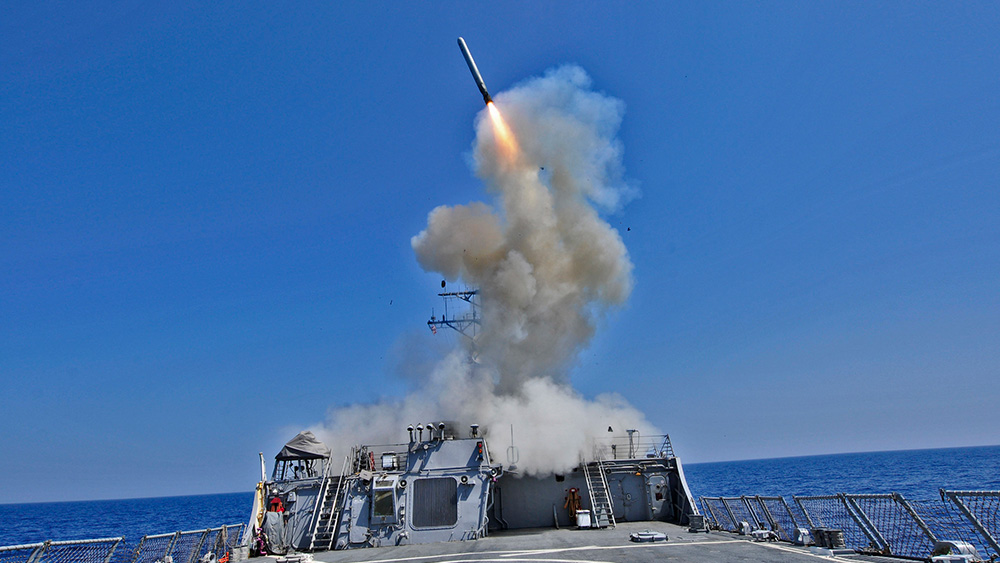
Flickr/U.S. Dept. of Defense

Maria DiBari
Bio

Momentum Intelligence Lab

Paige Orme
Bio

Momentum Intelligence Lab

Mon, 03/30/2026 - 12:03
  • Comment
  • RSS

Social Sharing block

  • Print
Body

Right now, as tensions rise around Iran and the Persian Gulf, the headlines are doing what they always do: tracking missiles, drones, and the defense companies building them. That matters, obviously. But it’s not the whole story.

ADVERTISEMENT

That’s because modern conflict isn’t constrained by weapons the way it used to be. It’s constrained by decisions.

The real bottleneck isn’t firepower. It’s decision power.

Washington has been scrambling to meet with major defense contractors after the latest strikes on Iran rapidly depleted U.S. munitions reserves. Senior officials reportedly called in companies like Lockheed Martin and RTX to discuss accelerating weapons production as stockpiles run down.

One analyst summed up the situation in a way that should make any serious leader pause: The Pentagon can manufacture only so much at a time. A senior defense official put it plainly, too. “We can only crank out so much.” This reflects the concern that sustained conflict could strain production capacity.

So, yes, supply matters. Production capacity matters. Stockpiles matter. But underneath all of that is a more persistent constraint, and it shows up as soon as the pace of operations accelerates.

How fast can you understand what’s happening, and how confidently can you act on it?

We already have incredible platforms, and they’re flooding us with intelligence

The United States and its allies already field some of the most advanced defense platforms ever built. Fighter aircraft fuse sensor data across air and space domains. Missile defense systems track incoming threats in seconds. Satellites watch entire regions continuously. Autonomous drones can observe a battlefield for hours or days at a time.

Every one of those systems produces intelligence. Lots of it.

Modern conflicts now involve radar systems tracking launches, satellites observing movements, cyberintelligence monitoring digital threats, and drone sensors streaming real-time video across operational networks. Analysts are trying to process all of it all at once, while commanders are trying to make decisions that carry real-world consequences, often on timelines that are closer to seconds than minutes.

Here’s the catch. These systems weren’t designed to work together. They were built by different contractors, deployed at different times, and governed by different security environments. So the intelligence might exist inside the enterprise, but that doesn’t mean it can be found quickly, stitched together correctly, and understood clearly when the pressure is on.

And during a high-speed conflict, that gap creates friction that shows up everywhere.

The battlefield has become an intelligence environment

Recent reporting about Iran shows just how quickly the environment is evolving. Iran’s drone production alone has been estimated at about 10,000 per month, creating a constant stream of low-cost threats that traditional defense systems must identify and respond to. At the same time, as reported by Reuters, defense analysts warn that prolonged conflict could strain missile supply chains and force difficult prioritization decisions across global theaters.

This is the shift. The battlefield is no longer just a contest of platforms and munitions. It’s an intelligence environment. The limiting factor is increasingly how quickly that intelligence can be turned into coherent decisions. The challenge is not spotting the signal anymore; it’s making sense of the signals quickly enough to matter.

The next goal is decision advantage

For decades, defense innovation meant building better platforms. Better aircraft. Stronger missile systems. More advanced sensors. That work is still essential, and nobody is arguing otherwise. But as the number of systems multiplies, something new becomes necessary: the architecture that connects them. Think of it as an intelligence layer that sits above defense platforms.

It doesn’t replace aircraft, satellites, or missile systems. Instead, it makes intelligence from those systems discoverable, interpretable, and usable inside a shared operational picture without forcing teams to bounce between fragmented portals, disconnected databases, and one-off reporting pipelines that collapse the moment the environment changes.

In practical terms, it means less time hunting and reconciling, and more time deciding and acting. That might sound subtle at first. It’s not, because the modern battlefield is becoming a vast network of sensors, platforms, and data streams. Decision advantage will increasingly come from organizations that can integrate those signals faster than their adversaries, and then deliver the right insight to the right person in the right context, with enough confidence that they are willing to move.

The bombing of a girls’ elementary school in Iran—killing more than 160 children—was not a failure of weapon precision. It was a failure of judgment apparently based on outdated information. In a battlefield saturated with data, surveillance, and advanced targeting systems, a civilian site that should have been clearly identified was still struck. A visual investigation by The New York Times showed the school grounds had been fenced off from the military base between 2013 and 2016.

This is exactly the shift defense leaders are beginning to confront: The next critical vulnerability is not in the weapon, but in the intelligence and decision layer that governs it. Modern warfare is no longer limited by firepower—it’s limited by the ability to interpret data, validate context, and enforce accountable decisions in real time. Without that layer, even the most advanced systems don’t create advantage—they amplify risk.

The next strategic competition is integration speed

Defense contractors have historically competed to build the best platforms. The next strategic competition may focus on how effectively those platforms work together, especially when missile launches, drone swarms, satellite intelligence, and cybermonitoring all converge into a single operational environment. Recent events around Iran highlight this transition clearly. When the tempo increases and the complexity spikes, the ability to integrate information throughout systems becomes just as important as the systems themselves.

The future of defense will still include aircraft, satellites, and missile defenses. But above them will sit something equally important: the architecture that allows leaders to understand the battlefield fast enough to act. In the coming decade, the most important breakthrough in defense might not be a new weapon. It may be the system that determines how every other system is used.

Add new comment

The content of this field is kept private and will not be shown publicly.
About text formats
Image CAPTCHA
Enter the characters shown in the image.

© 2026 Quality Digest. Copyright on content held by Quality Digest or by individual authors. Contact Quality Digest for reprint information.
“Quality Digest" is a trademark owned by Quality Circle Institute Inc.

footer
  • Home
  • Print QD: 1995-2008
  • Print QD: 2008-2009
  • Videos
  • Privacy Policy
  • Write for us
footer second menu
  • Subscribe to Quality Digest
  • About Us