{domain:"www.qualitydigest.com",server:"169.47.211.87"} Skip to main content

        
User account menu
Main navigation
  • Topics
    • Customer Care
    • Regulated Industries
    • Research & Tech
    • Quality Improvement Tools
    • People Management
    • Metrology
    • Manufacturing
    • Roadshow
    • QMS & Standards
    • Statistical Methods
    • Resource Management
  • Videos/Webinars
    • All videos
    • Product Demos
    • Webinars
  • Advertise
    • Advertise
    • Submit B2B Press Release
    • Write for us
  • Metrology Hub
  • Training
  • Subscribe
  • Log in
Mobile Menu
  • Home
  • Topics
    • Customer Care
    • Regulated Industries
    • Research & Tech
    • Quality Improvement Tools
    • People Management
    • Metrology
    • Manufacturing
    • Roadshow
    • QMS & Standards
    • Statistical Methods
    • Supply Chain
    • Resource Management
  • Login / Subscribe
  • More...
    • All Features
    • All News
    • All Videos
    • Contact
    • Training

Studying Old Dogs With New Statistical Tricks

Bone-cracking hypercarnivores and 3D surface plots

Eston Martz
Wed, 06/05/2013 - 16:37
  • Comment
  • RSS

Social Sharing block

  • Print
Body

A while back my colleague Jim Frost wrote about applying statistics to decisions typically left to expert judgment; I was reminded of his post this week when I came across a new research study that takes a statistical technique commonly used in one discipline, and applies it in a new way.

ADVERTISEMENT

The study, by paleontologist Zhijie Jack Tseng, looked at how the skulls of bone-cracking carnivores—modern-day hyenas—evolved. They may look like dogs, but hyenas in fact are more closely related to cats. However, some extinct dog species had skulls much like a hyena’s.
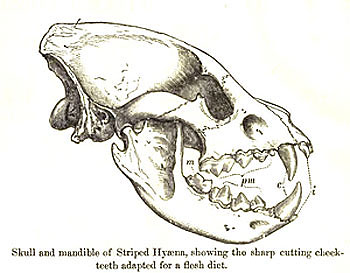
Tseng analyzed data from 3D computer models of theoretical skulls, along with those of existing species, to test the hypotheses that specialized bone-cracking hyenas and dogs evolved similar skulls with similar biting capabilities, and that the adaptations are optimized from an engineering perspective. 

 …

Want to continue?
Log in or create a FREE account.
Enter your username or email address
Enter the password that accompanies your username.
By logging in you agree to receive communication from Quality Digest. Privacy Policy.
Create a FREE account
Forgot My Password
Top Stories
‘Not relevant’ is no longer an answer on climate change
AI Job Growth Claims Outrun the Evidence
Your Innovation Problem May Not Be an Innovation Problem
How Manufacturers Can Make Expertise Teachable
Your Environmental Monitoring Program Is Sampling at the Wrong Time

Add new comment

Please login to comment.

© 2026 Quality Digest. Copyright on content held by Quality Digest or by individual authors. Contact Quality Digest for reprint information.
“Quality Digest" is a trademark owned by Quality Circle Institute Inc.

footer
  • Home
  • Print QD: 1995-2008
  • Print QD: 2008-2009
  • Videos
  • Privacy Policy
  • Write for us
footer second menu
  • Subscribe to Quality Digest
  • About Us
  • Contact Us