{domain:"www.qualitydigest.com",server:"169.47.211.87"} Skip to main content

        
User account menu
Main navigation
  • Topics
    • Customer Care
    • Regulated Industries
    • Research & Tech
    • Quality Improvement Tools
    • People Management
    • Metrology
    • Manufacturing
    • Roadshow
    • QMS & Standards
    • Statistical Methods
    • Resource Management
  • Videos/Webinars
    • All videos
    • Product Demos
    • Webinars
  • Advertise
    • Advertise
    • Submit B2B Press Release
    • Write for us
  • Metrology Hub
  • Training
  • Subscribe
  • Log in
Mobile Menu
  • Home
  • Topics
    • Customer Care
    • Regulated Industries
    • Research & Tech
    • Quality Improvement Tools
    • People Management
    • Metrology
    • Manufacturing
    • Roadshow
    • QMS & Standards
    • Statistical Methods
    • Supply Chain
    • Resource Management
  • Login / Subscribe
  • More...
    • All Features
    • All News
    • All Videos
    • Contact
    • Training

Women Who Measure the Universe and Chart the Skies

How Sandrine Thomas and the Rubin Observatory changed history and metrology

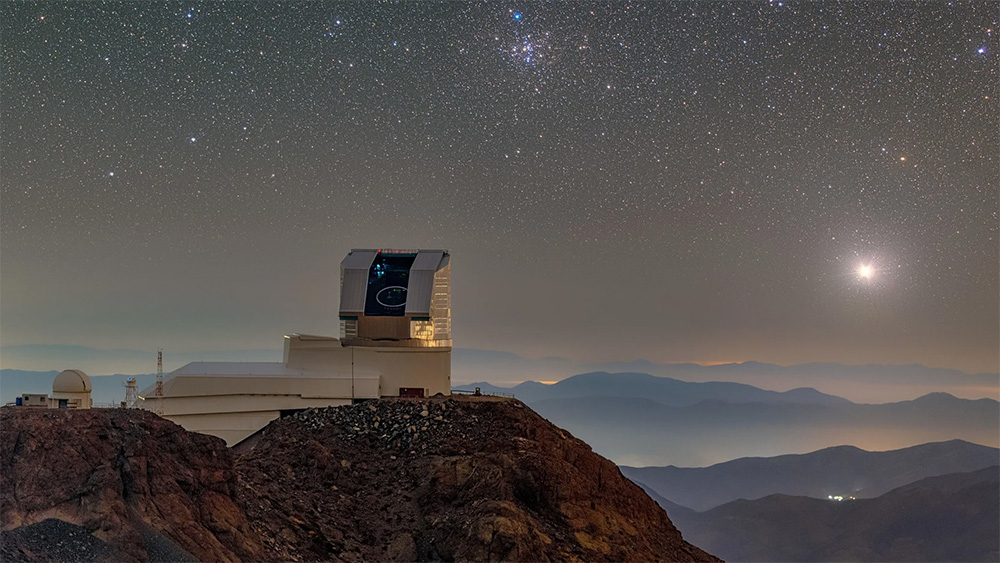
NSF–DOE Vera C. Rubin Observatory/NOIRLab/SLAC/NSF/DOE/AURA/P. Horálek (Institute of Physics in Opava)

Quality Digest
Thu, 04/30/2026 - 12:03
  • Comment
  • RSS

Social Sharing block

  • Print
Body

When the Coordinate Metrology Society (CMS) gathers for the 42nd annual conference this July in Dallas, one of the most anticipated talks won’t be about machining tolerances or inspection gauges but the cosmos itself. Sandrine J. Thomas, associate director for Summit Operations at the Vera C. Rubin Observatory, is delivering a keynote that connects the meticulous art of measurement on Earth with the vast scale of the universe beyond.

ADVERTISEMENT

Thomas leads the team responsible for acquiring all data for the Legacy Survey of Space and Time (LSST), an audacious decade-long astronomical project that maps the entire southern sky every few nights using the largest digital camera ever built. At 3.2 gigapixels, the LSST camera can detect objects 100 million times fainter than what the human eye can see—a cosmic extension of the precision disciplines CMS has championed for decades.

 …

Want to continue?
Log in or create a FREE account.
Enter your username or email address
Enter the password that accompanies your username.
By logging in you agree to receive communication from Quality Digest. Privacy Policy.
Create a FREE account
Forgot My Password
Top Stories
All Whys Are Not The Same
AI May Be Making Your Quality Problem Worse
The 6 Best Quality Management Software Features That Simplify Your QMS
Flying Blind: What Your Quality Data Miss Every Shift
What I Discovered About Quality Concepts by Watching My Newborn Granddaughter

Add new comment

Please login to comment.

© 2026 Quality Digest. Copyright on content held by Quality Digest or by individual authors. Contact Quality Digest for reprint information.
“Quality Digest" is a trademark owned by Quality Circle Institute Inc.

footer
  • Home
  • Print QD: 1995-2008
  • Print QD: 2008-2009
  • Videos
  • Privacy Policy
  • Write for us
footer second menu
  • Subscribe to Quality Digest
  • About Us
  • Contact Us