
{domain:"www.qualitydigest.com",server:"169.47.211.87"} Skip to main content
        
User account menu
Main navigation
  • Topics
    • Customer Care
    • FDA Compliance
    • Healthcare
    • Innovation
    • Lean
    • Management
    • Metrology
    • Operations
    • Risk Management
    • Roadshow
    • Six Sigma
    • Standards
    • Statistics
    • Supply Chain
    • Sustainability
    • Training
  • Videos/Webinars
    • All videos
    • Product Demos
    • Webinars
  • Advertise
    • Advertise
    • Submit B2B Press Release
    • Write for us
  • Metrology Hub
  • Training
  • Subscribe
  • Log in
Mobile Menu
  • Home
  • Topics
    • 3D Metrology-CMSC
    • Customer Care
    • FDA Compliance
    • Healthcare
    • Innovation
    • Lean
    • Management
    • Metrology
    • Operations
    • Risk Management
    • Roadshow
    • Six Sigma
    • Standards
    • Statistics
    • Supply Chain
    • Sustainability
    • Training
  • Login / Subscribe
  • More...
    • All Features
    • All News
    • All Videos
    • Training

The Making of ‘Error Propagation: The Silent Killer’

Jeff Dewar, CEO, Quality Digest

An inside look at how Episode 2 brings invisible science to life—with LEGO bricks, exotic microscopes, and a $327 million space crash
Jeff Dewar
Bio

Millennium 360

Tue, 12/23/2025 - 12:03
  • Comment
  • RSS

Social Sharing block

  • Print
Body

When we set out to film Episode 2, we faced a fundamental challenge: How do you make people care about errors they can’t see?

(See all the episodes here.)

Error propagation is critical to metrology, the science of measurement, but it’s abstract. These are mistakes measured in tiny amounts that compound and build until they create failure, sometimes catastrophic. To make this invisible danger visible, we needed something relatable.

That’s when someone said, “What about LEGO bricks?”

The LEGO revelation
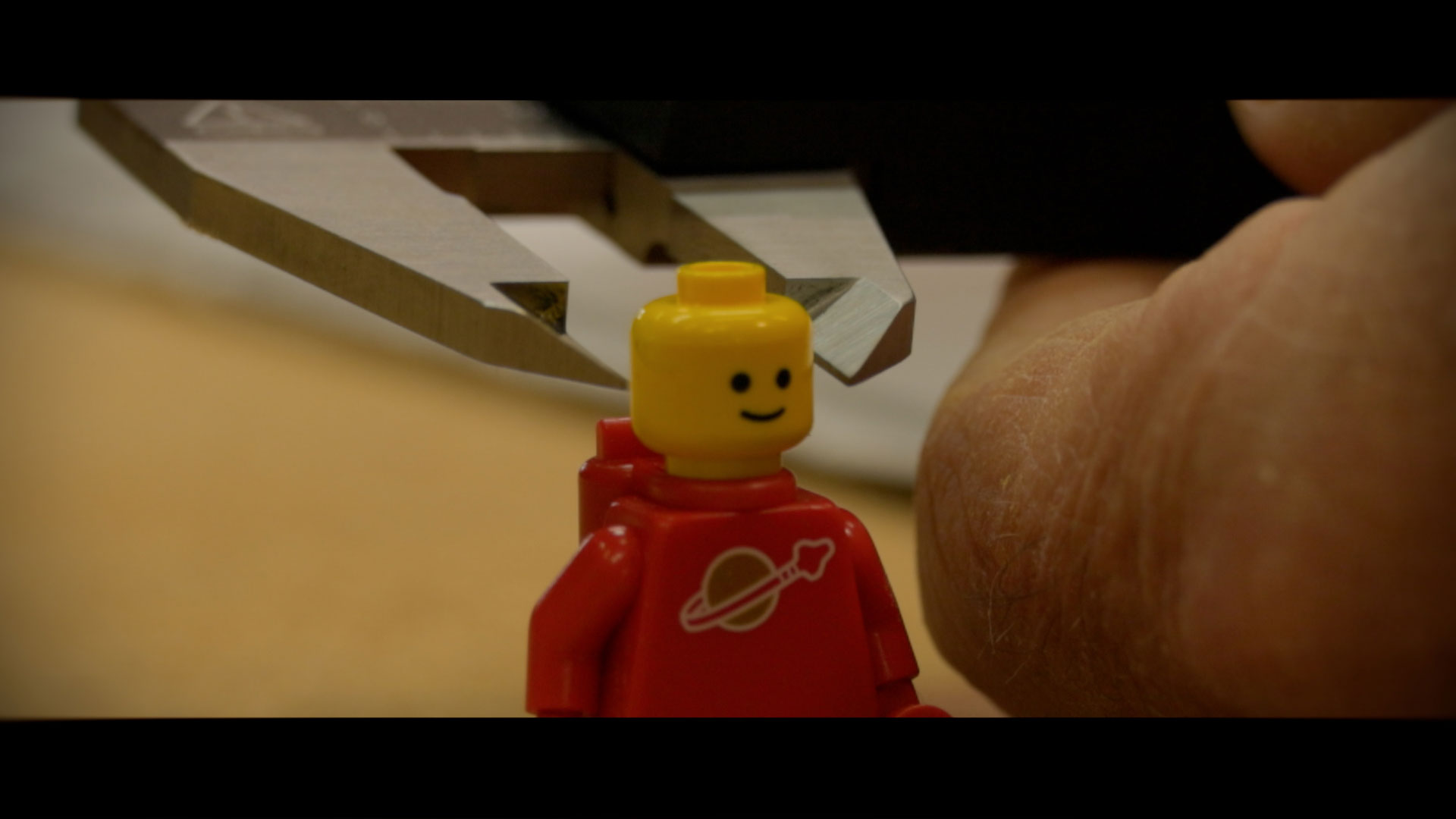
Quality Digest editor-in-chief Dirk Dusharme measuring LEGO minifigure with calipers in Auburn studio. 

To be honest, I was skeptical at first. A metrology documentary opening with children’s toys? But the research convinced me. LEGO bricks are manufactured with tolerances of 10 micrometers (one-tenth the thickness of a human hair). Everyone has held a LEGO brick, but nobody knows that this everyday miracle of measurement requires the same precision used to build spacecraft.

Three cities, three technologies

Our Emmy-award winning video producer, Christopher Allen Smith, hit the road again. His first stop was Auburn, California, where Quality Digest editor-in-chief Dirk Dusharme demonstrated measurement basics with handheld calipers. Watching him measure the same LEGO minifigure head multiple times and get different readings—varying by several hundredths of a millimeter—drove home the point: Even experienced operators introduce error.

Rex Horner with the DSX2000 microscope at Evident Scientific

Next stop in California was at Evident Scientific in San Jose. Rex Horner from Evident’s technical team used the DSX2000 digital microscope—worth more than most of our cars—to scan our minifigure. The system’s edge-detection algorithms eliminate human subjectivity, measuring the toy’s smile at 395 microns wide with perfect repeatability. What would take a human considerable time happened automatically in seconds.

Quality Digest video producer Christopher Allen Smith, right, films Taylor Lewis demonstrating Hexagon’s VR800 structured light scanner

A big payoff came in Las Vegas. Taylor Lewis of Hexagon Manufacturing Intelligence was using the VR800 structured light scanner, and we asked him to measure our deliberately wrongly assembled LEGO structure. We did what LEGO hobbyists call “illegal building”—forcing pieces perpendicular between the little round studs.

The VR800 saw the stress immediately. What looked fine to our eyes showed clear deformation on-screen. As we added more incorrectly connected pieces, the errors compounded until even we could see it: The entire plate bent like an archer’s bow.

Bowed LEGO plate assembly showing obvious deformation

When stakes are higher

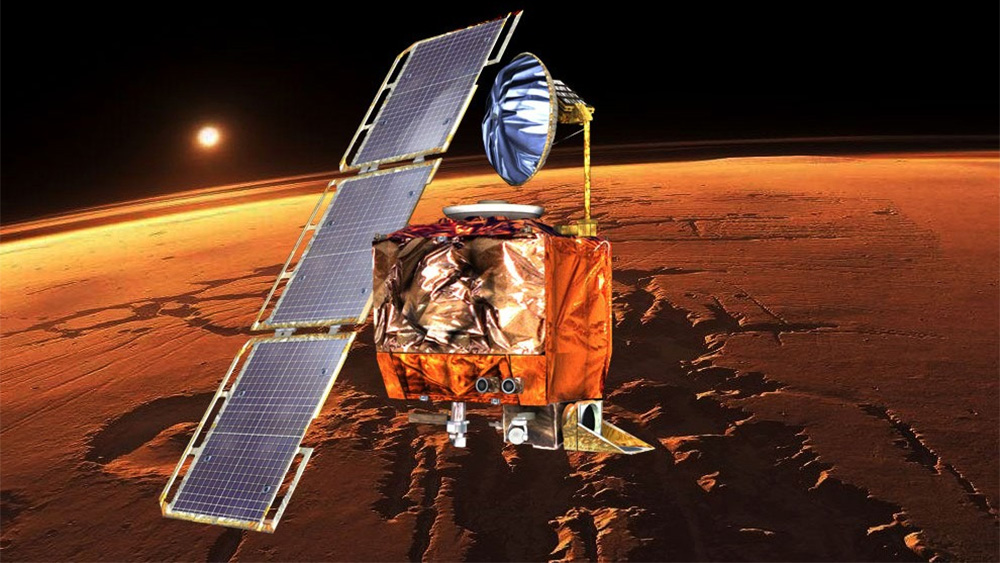
Of course, when LEGO bricks fail, you rebuild. When spacecraft fail, you lose $327 million and years of work.

The Mars Climate Orbiter became our cautionary tale. The spacecraft’s software used metric units, while Lockheed Martin’s ground navigation used imperial units. Because a newton (metric) is 4.45 times larger than a pound-force (imperial), every trajectory correction over-burned by that factor. Small errors, repeated dozens of times over millions of kilometers, put the orbiter 169 kilometers off course. When it reached the atmosphere of Mars, it either broke up or skipped off into space. Either way, it never phoned home again.

Those of you who watched Episode 1, “What the %@$# is Metrology?” might recall the story of the Swedish warship Vasa, and how faulty design and the same kind of measurement goof-up sank that ship nearly four centuries ago.  

Why it matters

In my first article in this series, I wrote that most people have no idea what’s happening in the factories and facilities that make modern life possible. Metrology, a secret science few have heard of, surrounds all of us, enabling everything from medical devices to aerospace manufacturing. Every day, clever and creative technicians, assembly line workers, and engineers are using metrology to fight error propagation—the silent killer.

Visit qualitydigest.com/roadshow to watch Episode 2.

Next stop on The Quality Digest Roadshow: Customizing Corvettes. New episodes in the video series will be released every few weeks.

Production note: Episode 2 was filmed across three states with partners Evident Scientific (San Jose, California) and Hexagon Manufacturing Intelligence (Las Vegas, Nevada). Special thanks to Rex Horner (Evident) and Taylor Lewis (Hexagon) for their expertise and creativity.

Add new comment

The content of this field is kept private and will not be shown publicly.
About text formats
Image CAPTCHA
Enter the characters shown in the image.

© 2025 Quality Digest. Copyright on content held by Quality Digest or by individual authors. Contact Quality Digest for reprint information.
“Quality Digest" is a trademark owned by Quality Circle Institute Inc.

footer
  • Home
  • Print QD: 1995-2008
  • Print QD: 2008-2009
  • Videos
  • Privacy Policy
  • Write for us
footer second menu
  • Subscribe to Quality Digest
  • About Us