{domain:"www.qualitydigest.com",server:"169.47.211.87"} Skip to main content

        
User account menu
Main navigation
  • Topics
    • Customer Care
    • Regulated Industries
    • Research & Tech
    • Quality Improvement Tools
    • People Management
    • Metrology
    • Manufacturing
    • Roadshow
    • QMS & Standards
    • Statistical Methods
    • Resource Management
  • Videos/Webinars
    • All videos
    • Product Demos
    • Webinars
  • Advertise
    • Advertise
    • Submit B2B Press Release
    • Write for us
  • Metrology Hub
  • Training
  • Subscribe
  • Log in
Mobile Menu
  • Home
  • Topics
    • Customer Care
    • Regulated Industries
    • Research & Tech
    • Quality Improvement Tools
    • People Management
    • Metrology
    • Manufacturing
    • Roadshow
    • QMS & Standards
    • Statistical Methods
    • Supply Chain
    • Resource Management
  • Login / Subscribe
  • More...
    • All Features
    • All News
    • All Videos
    • Training

The Audit-Ready Factory

Using AI and digital tools to modernize quality and training

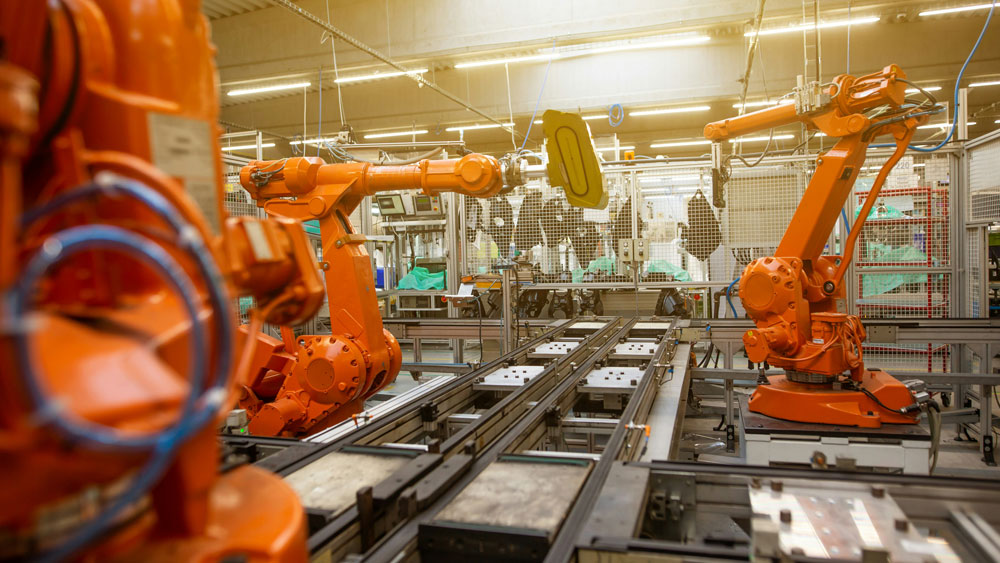
Simon Kadula/Unsplash

Scott Ginsberg
Bio
Wed, 03/25/2026 - 12:02
  • Comment
  • RSS

Social Sharing block

  • Print
Body

Quality leaders know that an audit rarely fails because a company lacks documentation. It fails because the information exists somewhere but can’t be retrieved, verified, or executed consistently when it matters. For decades, preparing for an audit meant assembling binders, tracking down spreadsheets, and hoping the right subject-matter expert was available to explain a process. That model no longer works in modern manufacturing environments defined by workforce turnover, complex regulations, and globally distributed operations.

ADVERTISEMENT

Today, the most resilient manufacturers are building what I call the audit-ready factory. Instead of scrambling for documentation when an auditor arrives, they embed quality, training, and accountability directly into daily operations using digital platforms and AI-enabled tools. The result is not just smoother audits. It’s also faster learning, more consistent production, and a stronger culture of quality.

From reactive compliance to real-time visibility

In many factories, compliance still moves at the speed of manual information retrieval. When auditors request a training record, an SOP revision history, or maintenance log, teams begin digging through disconnected systems.

Digital platforms fundamentally change that dynamic. By centralizing documentation, training records, and operational data, manufacturers reduce the time to retrieval from hours or days to minutes. These improvements are not just about convenience. Faster access to accurate information signals something deeper: The organization has operational control over its processes.

Building quality into the workflow

Historically, many quality programs relied on inspection after production. The assumption was that mistakes were inevitable and could be caught at the end.

Digital work instructions and AI-enabled guidance systems flip that model. Instead of relying on memory or tribal knowledge, operators follow standardized, step-by-step instructions supported by visual guidance, embedded data collection, and automated validation. This shifts quality upstream, where it has the greatest impact.

Manufacturers adopting this approach are seeing measurable results. Food manufacturer Blue Buffalo introduced QR-based access to work instructions and compliance documentation directly at the point of use. This “scan-and-learn” model improved audit scores by 75%. These outcomes highlight a key lesson: Quality improves when knowledge is embedded in the work itself.

AI and the end of tribal knowledge

One of the greatest hidden risks to compliance is the loss of tribal knowledge. In many factories, critical procedures exist only in the minds of experienced operators. When those employees retire or move on, the knowledge disappears with them. AI-enabled documentation tools are now helping organizations capture and scale this expertise faster than ever. Video recordings, existing documents, and process walkthroughs can be converted into structured, searchable instructions that new workers can follow immediately.

Manufacturers are already seeing the effects. General Mills implemented digital training guides accessible through tablets and QR codes throughout its production environment. This approach reduced training time by more than 60% while preserving critical process knowledge for a workforce facing retirement transitions. At Airstream, structured digital learning pathways replaced informal job shadowing and inconsistent training. New hires were able to become productive faster, and turnover among new employees dropped dramatically.

In each case, AI and digital platforms transformed undocumented expertise into scalable operational knowledge.

What a modern connected worker platform should enable

Building an audit-ready factory requires more than digitizing documents. It requires a system that connects knowledge, training, execution, and improvement in a single operational layer.

In my experience working with manufacturers modernizing their quality systems, the most effective platforms share several core capabilities. One of the biggest barriers to digital transformation is the time required to document procedures. Engineers and experienced operators are already busy running production.

Modern connected worker platforms increasingly solve this problem by using AI to capture knowledge directly from the floor. Operators can record a short video of a process while narrating the steps, and AI tools convert that recording into structured procedures with images, step-by-step instructions, and translations. This dramatically reduces the effort required to document processes while preserving expertise that would otherwise remain undocumented.

Automated conversion of legacy documentation

Most manufacturers already have thousands of procedures stored in Microsoft Word files, PDFs, PowerPoint presentations, and shared drives. The challenge is converting that content into formats that workers can actually use during production. New AI tools now automate this step by converting static documents into structured, mobile-ready instructions. Instead of manually rewriting procedures, organizations can transform legacy documentation into visual, interactive guides in minutes. This approach accelerates standardization while reducing the documentation backlog that often slows digital initiatives.

Embedded training and knowledge assessment

Documentation alone does not ensure execution. Workers must understand procedures and demonstrate competency. Many modern systems embed learning and assessment directly into operational content. AI can generate quizzes or comprehension checks automatically from procedures, allowing organizations to verify that workers understand tasks before performing them. This creates a direct link between standard work, training validation, and compliance records.

Intelligent change-management process updates are inevitable. New regulations, engineering improvements, and quality initiatives require procedures to evolve. The challenge is ensuring that workers understand those updates. Some platforms now use AI to summarize what changed in a procedure and highlight the modified sections. Workers acknowledge updates before executing the task again, creating a clear compliance trail. This transforms change management from a communication challenge into a structured workflow.

Point-of-use knowledge access

Workers frequently lose valuable time searching for the right procedure or asking colleagues for guidance. Modern connected worker systems enable employees to ask questions using natural language, voice commands, or images. The platform returns the relevant instruction or procedure based on the worker’s role and context. Instead of guessing or relying on memory, operators can instantly access trusted, verified information.

Continuous improvement built into daily work

Finally, the best systems embed continuous improvement directly into daily operations. Workers can submit feedback, flag issues, or recommend process changes directly from the instructions they are using. AI helps summarize trends in feedback, and routes suggestions to engineering or quality teams. Once approved, updates are published instantly with version control and retraining triggers. Over time, this creates a powerful feedback loop between the people performing the work and those responsible for improving it.

Creating a digital chain of accountability

An audit-ready factory does not just document processes. It verifies that those processes were executed correctly. Modern quality systems now generate a digital record of execution: who performed a task, when it occurred, what data was captured, and whether approvals were completed. This level of traceability is increasingly essential in regulated industries. These systems create a transparent chain of accountability that protects both quality outcomes and operational productivity.

The new standard: Continuous audit readiness

In the past, factories prepared for audits periodically. Today, the most advanced organizations are prepared every day. AI and digital tools are enabling this shift by embedding documentation, training, and verification directly into operational workflows. The benefits extend well beyond compliance.

Audit-ready factories onboard workers faster, reduce process variability, preserve institutional knowledge, and maintain consistent execution across shifts and locations. Most important, they transform quality from a periodic inspection into a continuous operational capability. In an era of increasing regulatory scrutiny and workforce disruption, that capability may become one of the most powerful competitive advantages a manufacturer can build.

Add new comment

The content of this field is kept private and will not be shown publicly.
About text formats
Image CAPTCHA
Enter the characters shown in the image.

© 2026 Quality Digest. Copyright on content held by Quality Digest or by individual authors. Contact Quality Digest for reprint information.
“Quality Digest" is a trademark owned by Quality Circle Institute Inc.

footer
  • Home
  • Print QD: 1995-2008
  • Print QD: 2008-2009
  • Videos
  • Privacy Policy
  • Write for us
footer second menu
  • Subscribe to Quality Digest
  • About Us