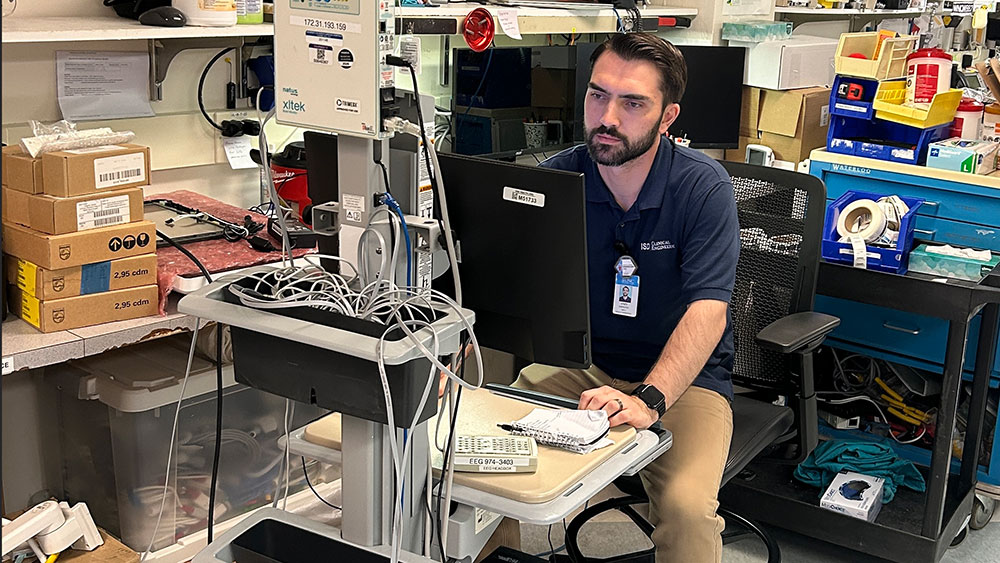
Andy Addington, BMET II
Three years ago, I’d never heard the term biomedical equipment technician (BMET). I didn’t know the field of healthcare technology management (HTM) existed. Today, I’m a BMET II responsible for making sure critical medical equipment is available and safe for patient care. It’s incredible to look at how my professional life changed—all because I took a chance on an apprenticeship program in an unknown field.
|
ADVERTISEMENT |
Before I joined TRIMEDX as an apprentice, I was looking for something new. I had just earned my degree in cognitive science related to psychology, but if I wanted to continue down that career path, I’d have to dedicate more years of my life to schooling, which I knew wasn’t right for me. What appealed to me was learning something new while getting paid to do it.
When I came across the Association for the Advancement of Medical Instrumentation’s BMET apprenticeship program, sponsored by TRIMEDX, I decided to give it a shot. I entered the field without knowing much about it. But the more I learned, the more its purpose resonated with me.
Learning by doing, from Day One
I walked into the shop on my first day not knowing what to expect. When someone from the team told me to grab scrubs and head to an operating room with them, I initially thought they were joking. But I soon found myself in scrubs, looking through the operating room’s windows and learning about how we help the clinicians who are saving lives.
The tech who brought me to the OR was fascinated by the surgeries taking place. He said he could watch it all day. I was more focused on the fact that I was literally looking at the inside of a person. At that point, I wouldn’t say I questioned my career choice. It felt more like a field trip than a reflection of what my day-to-day work would be when I officially started.
It was overwhelming, but I always felt supported. While I was an apprentice, every technician on my team took the time to walk me through what they did, explain why it mattered, and answer even the most basic questions. I spent a lot of time tagging along, helping when I could and learning from the experienced team members.
Building skills and confidence
Over time, I developed technical skills. I learned how different devices work and how to troubleshoot issues when they arise. One of the most valuable aspects of the program was the confidence I gained. Every problem became an opportunity to learn.
Early on, I would run into an issue and have no clue where to start. I’d never seen it before. So, I’d lean on my teammates, pay close attention, and work with them to solve each problem. When I saw that same issue later, I would know exactly how to approach it. That consistent, real-life exposure—paired with mentorship and hands-on experience—helped me quickly become more independent and capable.
About a year into the 24-month program, I started to really take on more responsibilities. I was assigned my own equipment and departments, which made my eventual transition to BMET II feel seamless instead of overwhelming. When I completed the program and officially became a BMET II, my day-to-day routine didn’t change dramatically. I’d already been doing the job. I knew the equipment. I knew the hospital. I knew the team.
Making a real difference in patient care
One moment that vividly stands out in my mind involved a call from the pediatric intensive care unit (PICU) early in my apprenticeship. A pacemaker was being used on a baby, but the pacing spikes weren’t displaying correctly on the monitor. Those readings were critical for the care team to properly treat the baby.
A senior technician, Joe Cromling, and I worked through the issue together, and it was no simple fix. He and I spent hours that Friday evening troubleshooting the issue and working with Philips technical and clinical support, but with no solution. Eventually, we had to let the nursing staff know there was nothing more we could do at the time and that the issue would need to be escalated. That felt pretty defeating, especially after exhausting every option we could think of.
A field service engineer came in over the weekend to collect additional data, and the following week the issue was escalated to Philips’ national support specialist team. It turned out to be a combination of adjusting the lead placement pattern in the monitor—which we had already tried—and changing a less obvious setting from pediatric to neonatal. It wasn’t really an “aha” moment—honestly, it left us a little confused about why that specific combination worked. But it did resolve the issue, and the specialist checked in with me during the next two months to make sure it never happened again—which it didn’t.
Seeing how Joe approached an unfamiliar problem taught me a lot about the troubleshooting process and how to stay calm and methodical when the answer isn’t clear. It taught me that troubleshooting doesn’t always end with a dramatic breakthrough; sometimes it’s about persistence, escalation, and trusting the process even when the answer isn’t obvious.
During my apprenticeship, Joe’s experience and depth of knowledge made a huge difference in how I learned. He would trust me to work on things independently in the shop after giving me detailed instructions, which gave me both autonomy and the chance to learn by doing. At the same time, he was always nearby and willing to help if I had questions or ran into issues, so I never felt like I was on my own.
Joe also took me with him on the floor and introduced me to nurse managers, which showed me how important relationships are in this role. Watching how he interacted with nursing staff taught me that being a BMET is about much more than fixing equipment—it’s also about trust, communication, and being a dependable partner for the people using that equipment every day. Even now, if anyone in the shop has a question or runs into something unusual, the usual answer is, “Ask Joe—he probably knows.”
Knowing that baby’s pacemaker was depending on our work put everything into perspective. That incident still reminds me of why our work matters.
Building a career through hands-on learning
For people who are curious, adaptable, and constantly willing to learn, an apprenticeship is an incredible opportunity. Although the job of making sure medical equipment is ready and reliable may seem intimidating, you don’t have to have all the answers right away. The BMET apprenticeship program at TRIMEDX is about continual growth and development.
Healthcare technology management is a great fit for people who enjoy troubleshooting, problem-solving, and doing meaningful work that supports patient care. The need for BMETs is significant—more than 7,000 BMET job openings are expected each year in the U.S., while only about 400 students graduate from BMET programs annually. Medical equipment is in every hospital. It must work every time. That creates long-term career opportunities, job security, and room to grow in many different directions.
The apprenticeship showed me what’s possible when you’re given the chance to learn on the job with the right support around you. Even though I’ve completed the apprenticeship program and moved into a BMET II role, I’m still learning something new every single day. It’s one of the things I enjoy most about this field. I might not have known this career existed before, but now I can’t wait to see where it takes me.
Published by TRIMEDX in recognition of National Apprenticeship Week (April 26–May 2, 2026).

Add new comment