{domain:"www.qualitydigest.com",server:"169.47.211.87"} Skip to main content

        
User account menu
Main navigation
  • Topics
    • Customer Care
    • Regulated Industries
    • Research & Tech
    • Quality Improvement Tools
    • People Management
    • Metrology
    • Manufacturing
    • Roadshow
    • QMS & Standards
    • Statistical Methods
    • Resource Management
  • Videos/Webinars
    • All videos
    • Product Demos
    • Webinars
  • Advertise
    • Advertise
    • Submit B2B Press Release
    • Write for us
  • Metrology Hub
  • Training
  • Subscribe
  • Log in
Mobile Menu
  • Home
  • Topics
    • Customer Care
    • Regulated Industries
    • Research & Tech
    • Quality Improvement Tools
    • People Management
    • Metrology
    • Manufacturing
    • Roadshow
    • QMS & Standards
    • Statistical Methods
    • Supply Chain
    • Resource Management
  • Login / Subscribe
  • More...
    • All Features
    • All News
    • All Videos
    • Training

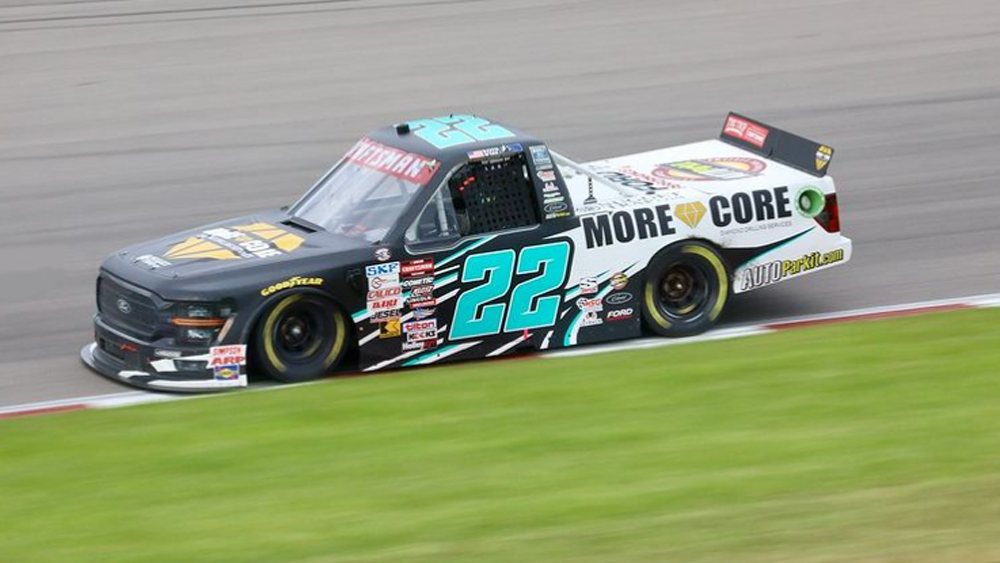
3D Scanners Aid NASCAR Stock Car Racing

Rapid, reliable part replication boosts race team’s performance

Credit: rbr_teams on Instagram.

Creaform
Bio
Wed, 09/25/2024 - 12:02
  • Comment
  • RSS

Social Sharing block

  • Print
Body

Reaume Bros. Racing is an American professional stock-car racing team that competes full time in the NASCAR Craftsman Truck Series. Owned by Josh Reaume, the team fields the No. 22 Ford F-150 full time for multiple drivers, the No. 27 part time for Keith McGee, and the No. 33 full time for Lawless Alan.

ADVERTISEMENT

As an engineering-driven team, Reaume’s experts constantly look for innovative solutions to remain competitive in a sport with stringent regulations and limited testing opportunities.

In addition, they must ensure that the team’s regularly modified vehicles comply with NASCAR’s regulations for each race.

The challenge: Conventional 3D measurements hamper competitive innovations

Reaume faced several challenges in generating accurate 3D measurement data to assess the team’s race vehicle bodies. Initially, the group relied on low-precision measuring systems, such as tape measures, which resulted in inaccuracies and inconsistencies that could compromise compliance with the race series rules.

This lack of accuracy posed a risk of human error and limited the engineers’ ability to definitively monitor and assess the condition of their trucks both pre- and post-race.

 …

Want to continue?
Log in or create a FREE account.
Enter your username or email address
Enter the password that accompanies your username.
By logging in you agree to receive communication from Quality Digest. Privacy Policy.
Create a FREE account
Forgot My Password
You Might Like...
What's a 150-year Old Meat Chopper Have to do With America's Favorite Sports Car?
How Remote Sensing and Aerial Imagery Can Improve Audit Accuracy
How to Get Your Employees to Love Your Brand
How DIY AI Unlocks Productivity and Flexibility
Which KPIs Prove Your Maintenance Plan Is Working?

Add new comment

Image CAPTCHA
Enter the characters shown in the image.
Please login to comment.

© 2026 Quality Digest. Copyright on content held by Quality Digest or by individual authors. Contact Quality Digest for reprint information.
“Quality Digest" is a trademark owned by Quality Circle Institute Inc.

footer
  • Home
  • Print QD: 1995-2008
  • Print QD: 2008-2009
  • Videos
  • Privacy Policy
  • Write for us
footer second menu
  • Subscribe to Quality Digest
  • About Us