Social Sharing block

Engineers are constantly searching for materials with novel, desirable property combinations. For example, an ultrastrong, lightweight material could be used to make airplanes and cars more fuel-efficient, or a material that is porous and biomechanically friendly could be useful for bone implants.
|
ADVERTISEMENT |
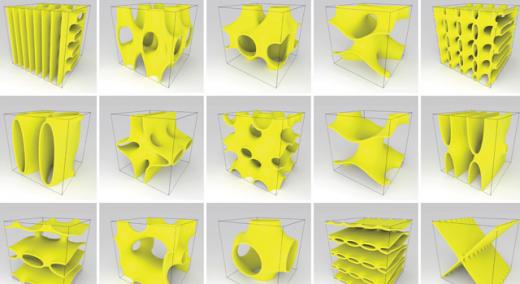
Cellular metamaterials—artificial structures composed of units, or cells, that repeat in various patterns—can help achieve these goals. But it’s difficult to know which cellular structure will lead to the desired properties. Even if one focuses on structures made of smaller building blocks, like interconnected beams or thin plates, there are an infinite number of possible arrangements to consider. So, engineers can manually explore only a small fraction of all the cellular metamaterials that are hypothetically possible.
…