All Features

Scott Crow
W ithin the utility industry, regional entities increasingly focus on internal controls as a measuring stick for overall compliance performance.
Developing and executing rock-solid internal controls with an automated compliance management software solution can help maintain compliance, not only…

Rob Moorey
Biomedical equipment technicians (BMETs) are facing increased workloads and staffing shortages that are expected to get worse as the current workforce retires.
About one-third of healthcare technology management (HTM) professionals are older than 55, putting pressure on health systems to attract…

ISO
Modern-day security breaches, such as the SolarWinds or T-Mobile attacks, aren’t one-off events; they are prime examples of how someone can steal your organization’s credentials and use them to gain illegitimate privileged access to sensitive assets. Data breaches happen daily, and in too many…

Harish Jose
In this article, I’m looking at Weber’s Law. It’s named after Ernst Heinrich Weber (1795–1878), a German physician who was one of the pioneers of experimental psychology. I highly recommend the Numberphile YouTube video that explains this in detail.
A simple explanation of Weber’s Law is that we…

Steve Ilmrud
As we approach 2025, one of the most pressing challenges manufacturers face is a growing labor shortage. Research anticipates that 1.9 million jobs will go unfilled during the next decade. This issue, compounded by the retirement of experienced workers and the lack of interest from younger…
James Chan
Asset maintenance isn’t just about fixing things when they break. It’s a complex mix of strategies, both proactive and reactive. Finding the most cost-effective blend makes all the difference in the success of your maintenance program and your business as a whole.
Whether your team is scrambling…

ISO
Cybersecurity has become increasingly critical in the digital age as organizations across all sectors face growing threats from cybercriminals.
Imagine that hackers breached a small healthcare practice through “phishing”—sending a scam email and gaining access to sensitive patient data, including…

Julie Gowthorpe
Management goals commonly include maintaining harmonious work environments that make employees happy and motivated. But how do you achieve this when people don’t get along? “Sort it out on your own” is no longer an option when employees are in conflict. As teams grow and experience turnover, a…

ISO
ISO and the United Nations Development Program (UNDP) have unveiled the world’s first international guidelines to help businesses and organizations expedite their contributions to the U.N.’s sustainable development goals (SDGs).
New guidelines for urgent action
The ISO/UNDP guidelines for…

Thierry Mantel
Metal cold-rolling is a critical process in manufacturing various steel and aluminum products. As manufacturers look for ways to modernize and streamline their manufacturing and quality control processes, digital technologies are poised to transform the metal cold-rolling industry by offering…
James Olthoff
Practically everything you use in your everyday life works because of measurement science. Without precise measurements, your car wouldn’t run, your phone wouldn’t work, hospitals couldn’t function, and the ATM would fail.
The National Institute of Standards and Technology (NIST) is the national…

Stephanie Ojeda
How can a quality manager secure stakeholder engagement and hold individuals accountable for the quality of their work throughout the corrective and preventive action (CAPA) cycle?
With the burden of quality and compliance on their shoulders, it can be tempting for a quality manager to gather…

Saurabh Joshi Shripad
Before the ICH Harmonized Tripartite Guideline Q9—“Quality risk management”—was introduced in 2005, the pharmaceutical industry was evolving but lacked a structured, scientific, and systematic approach. Various stakeholders, including the industry, regulators, and patient rights groups, recognized…
George Schuetz
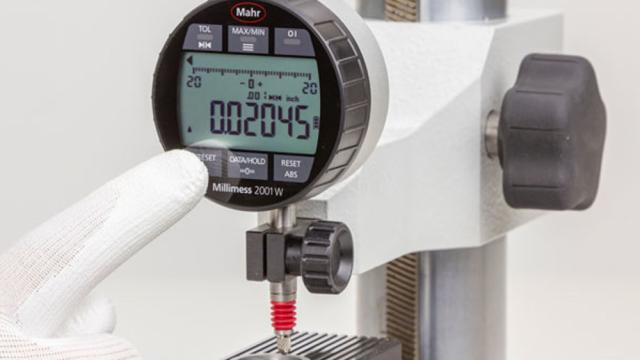
Electronic temperature compensation in gaging has become a valuable tool in improving the accuracy and gage repeatability and reproducibility (GR&R) of gages in harsh manufacturing environments.
The need for temperature compensation comes into play when the expected errors from temperature…

Seb Murray
Last year, the corporate world adopted a new term: flattening. This refers to how tech companies, which rapidly hired droves of middle managers during the pandemic boom, are now eliminating this layer through widespread job cuts.
Recent research by Mustafa Dogan, Alexandre Jacquillat, and Wharton’…

ISO
In a world where change is the only constant, organizations can no longer afford to be complacent. Keeping up with the pace of technological change is tough, and all business leaders must learn to adapt. It’s no longer enough to react to disruption. To get ahead of the competition, organizations…

James Chan
The U.S. Food and Drug Administration (FDA) is the country’s chief agency for regulating the manufacture, marketing, and distribution of critical consumer goods including food, cosmetics, medical devices, biological products, and pharmaceuticals. The FDA provides direct oversight of the businesses…

William A. Levinson
Most quality practitioners are familiar with the Taguchi loss function, which contends that the cost of any deviation from the nominal follows a quadratic model. This is in contrast to the traditional goalpost model, where anything inside the specification limits is good, and anything outside them…

Etienne Nichols
Design controls are a set of quality practices and procedures used to ensure that a finished device meets its user needs, intended use, and specified requirements.
The requirement for medical device companies to use design controls is established in 21 CFR Part 820, as well as ISO 13485:2016.
The…

Nadav Klein
When conflicts in a team, no matter how minor, are left unresolved, they can eventually breed resentment. If unaddressed, this could lead to cynicism and distrust, as well as harm to individual and team performance. How should leaders deal with this?
The intuitive answer might involve…

Jennifer King
Many people don’t realize just how long AI has been around in the healthcare industry—and are surprised to find out that it’s something that’s been relied on for 50 years already.
MYCIN, a computer-based model with machine learning capabilities, was developed by a team of researchers at Stanford…

Donald J. Wheeler
The objective of all improvement projects should be to improve the overall process. Everything else should be secondary to this objective. If you improve the efficiency of a support process, or even a portion of the core process, but at the same time lower the efficiency of the overall process,…

Michael Platt, Vera Ludwig
Four years after the Covid-19 pandemic accelerated remote work, its advantages and drawbacks have been well documented. For leaders, the biggest hurdles have remained constant: building employee engagement, trust, and communication.
Nano Tool
Scientists from the Wharton Neuroscience Initiative …

Robyn Coward, Brian Brooks
This year, the Medical Device Innovation Consortium held an Excellence in Quality Summit where it was promised that participants would receive a “unique opportunity to learn adoptable cutting-edge practices to maximize the impact of investing in quality across [their] total product life cycle.”…

John Tschohl
Are your employees empowered to make decisions on the spot in favor of the customer? Your single goal should be to have overly happy customers. Too many things go wrong each day. You want your employees to understand they are in customer service, and their No. 1 responsibility is to take care of…