All Features
Chris Caldwell
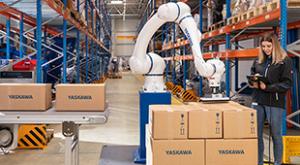
The quest to optimize equipment efficiency, ensure consistent quality, and lower operational costs while empowering a stronger workforce continues to permeate the industrial landscape. While challenges persist, the transformative potential that high-performance robotic automation is bringing to…

Donald J. Wheeler
When do we need to fit a lognormal distribution to our skewed histograms? This article considers the basic properties of the lognormal family of distributions and reveals some interesting and time-saving characteristics that are useful when analyzing data.
The lognormal family of distributions…
University of Vienna
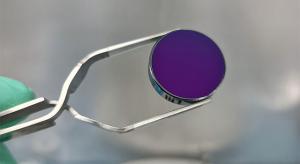
In the field of high-performance mirrors, everyone chases the impossible: coatings with perfect reflectivity. In the visible range of wavelengths (i.e., between 380 nm and 700 nm), advanced metallic mirrors achieve reflectivities as high as 99%, which means 1 photon is lost for every 99 reflected.…
Russell Riddiford
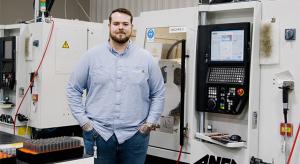
Whether you use a lot of cutting tools or sometimes find yourself desperately lacking the right tool, you’ve probably considered making your own—or at least sharpening your worn tools. But how do you decide if taking tool grinding in-house is the smart decision? It’s a question GKN Aerospace Engine…

NIST
From monitoring concentrations of greenhouse gases to detecting Covid in the breath, laser systems known as frequency combs can identify specific molecules as simple as carbon dioxide and as complex as monoclonal antibodies with unprecedented accuracy and sensitivity. Amazing as they are, however,…
Creaform
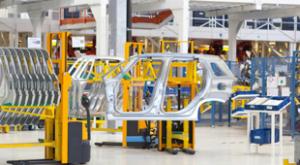
As manufacturers transition toward Industry 4.0 to speed up production cycles and accelerate their time to market, they nevertheless continue to face many challenges, particularly with respect to automating quality control.
Reducing costs drives the need for automated quality control
Automating…

Nicolas Lachaud-Bandres
Imagine a factory where quality assurance actually increases the production speed. Advanced metrology equipment is well on the way to making this a reality by introducing new levels of connectivity with other pieces of equipment and software throughout the factory.
Communication between different…
Master Gage and Tool Co.
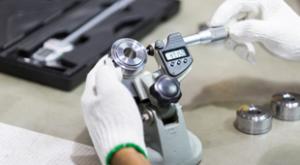
Calibration is essential in almost every facet of industrial processes. The calibration process verifies test instrument accuracy by comparison with recognized standards, and measurement validity hinges on one crucial concept: traceability.
Traceability adherence ensures a continuous link between…
Scott A. Hindle, Douglas C. Fair
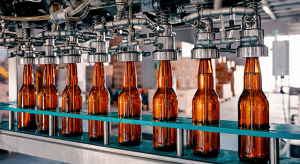
Parts 1, 2, and 3 of our series on statistical process control (SPC) have shown how data can be thoughtfully used to enable learning and improvement—and consequently, better product quality and lower production costs. Another area of SPC to tap into is that of measurement methods. How do we ensure…

NIST
Researchers at the National Institute of Standards and Technology (NIST) and their colleagues have built a superconducting camera containing 400,000 pixels—400 times more than any other device of its type.
Superconducting cameras allow scientists to capture very weak light signals, whether from…

Tara Fortier
Measuring and keeping track of time has allowed people to plan and coordinate locally with others for millennia.
As the world has modernized and our pace of life has increased, our relationship to time has changed. Time has become a scarce commodity. The standardization of time has also become…

Douglas C. Fair, Scott A. Hindle
Data overload has become a common malady. Modern data collection technologies and low-cost database storage have motivated companies to collect data on almost everything. The result? Data overload. Unfortunately, few companies leverage the information hidden away in those terabytes of data.
There…
Chris Anderson
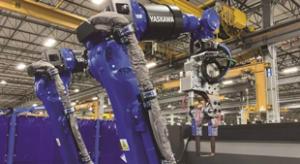
A cost-effective process that yields solid welds for long-term performance, resistance spot welding (RSW) remains a top joining method for a variety of structural parts. RSW was one of the first applications leveraged by robotics, and advances in robot hardware and software have enhanced it.
With…
Eric Whitley
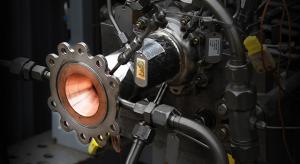
Historically, manufacturing processes have often involved substantial waste. From the early days of industrialization, companies have prioritized production speed and volume over efficient resource use. As resources seemed abundant and environmental consciousness was low, excessive waste became an…
Silke von Gemmingen
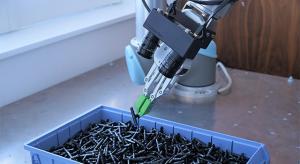
The manufacturing sector is currently facing a number of challenges. Technological change, pressing environmental issues, and globalization require a number of adjustments, such as investing in new technologies, conserving resources, and optimizing and securing supply chains.
Shifting production…
Julie van der Hoop
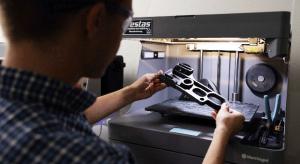
We’re all familiar with photos of Ford’s production lines in 1920. But would we recognize them today? As part of a broader trend referred to as “Industry 4.0,” systems in many factories have modernized considerably in recent years. This digitization of the manufacturing sector aims to apply…
Adam Zewe
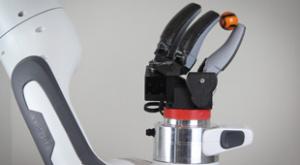
Imagine grasping a heavy object, like a pipe wrench, with one hand. You would likely grab the wrench using your entire fingers, not just your fingertips. Sensory receptors in your skin, which run along the entire length of each finger, would send information to your brain about the tool you are…

John Davis
Over the past decade, one of the biggest advances in enterprise resource planning (ERP) has been the ability to communicate and integrate with machines and external software programs to lower costs and increase efficiency. For example, BOM Compare software can reduce engineering costs and get jobs…

Ron Cowen
A single atom-thick sheet of carbon known as graphene has remarkable properties on its own. But things can get even more interesting when you stack up multiple sheets.
When two or more overlying sheets of graphene are slightly misaligned—twisted at certain angles relative to each other—they take…

Matthew Greenwood
It’s no secret the automotive sector is racing to find ways of tapping the potential of generative artificial intelligence (GenAI) to design and build the next generation of vehicles. This technology has promise, from redefining manufacturing processes to helping carmakers design smarter, safer,…

Sabine Terrasi
Robots do monotonous workflows and less pleasant, repetitive tasks with brilliance. Combined with image processing, they become “seeing” and reliable supporters of humans. They’re used in quality assurance to check components, help with assembling and positioning components, detect errors and…
Harish Jose
Today I’m looking at some practical suggestions for reducing sample sizes for attribute testing. A sample is chosen to represent a population. The sample size should be sufficient to represent the population parameters such as mean and standard deviation. Here we’re looking at attribute testing,…
Kristopher Lee
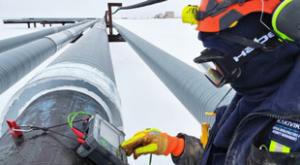
A leader in asset integrity management and inspection services, Kakivik Asset Management recently held an intro to phased-array class at its Anchorage, Alaska, office. The training was attended by nearly two dozen ultrasound specialists and was conducted by Shane Walton from the University of…
Oak Ridge National Laboratory
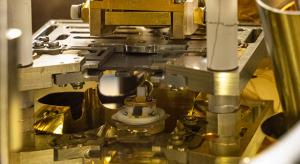
A team of scientists with the U.S. Department of Energy’s Oak Ridge National Laboratory (ORNL) has investigated the behavior of hafnium oxide, or hafnia, and its potential for use in novel semiconductor applications.
Materials such as hafnia exhibit ferroelectricity, which means that they are…
David Suttle
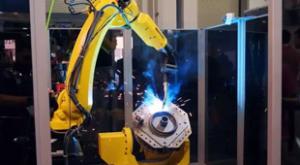
You often hear about self-driving cars and their levels of autonomy. When can drivers completely remove their hands from the steering wheel? This also applies to robots. How can robots become fully autonomous?
What are autonomous robots?
Let’s look at the levels of freedom for self-driving cars…