All Features
Pramin Pradeep
Here’s a scenario that should make any quality leader in pharma or medical devices uncomfortable: A software team building a diagnostic support tool uses an AI coding assistant to generate a data-processing module. The module looks correct, passes validation testing, and ships. Eighteen months…
Santosh Vasudevan
For more than 30 years I’ve audited management systems in manufacturing, automotive, laboratory, service, and nuclear environments. During that time I’ve watched internal auditing change shape several times. Paper checklists gave way to process-based auditing. Filing cabinets gave way to digital…

Paddy McNamara
The food manufacturing industry has spent the last two years trying to figure out where AI fits: Vision inspection systems? Predictive maintenance? Yield optimization? Contamination detection? The applications are real, but they’re expensive, technically complex, and often require significant…

ISO
The pressure is on. Throughout industries and regions, organizations are being asked the same question—not whether they care about the environment, but what they are doing about it.
The landscape for sustainability in business is tightening. Environmental responsibility is no longer just defined…
William A. Levinson
A significant change in ISO 9001:2026 involves separate actions to address risks and opportunities. In her article “Brainstorming: The Ultimate Risk Management Tool,” Jenna M Schoettker writes, “Think of risk as two sides of a coin. On one side we have our negative risk, while the other side would…

CANEA
Digital transformation and technologies such as artificial intelligence or the internet of things (IoT) aren’t just changing our society; they’re revolutionizing how we do business.
The speed of innovation can be a challenge. But it also presents an opportunity. As a quality leader, you must…

Kiran Myalur Dharmaputhra
Corrective and preventive action (CAPA) is the backbone of any quality management system. It’s where problems get solved, risks get reduced, and processes become more robust. Yet in many organizations, CAPA has become little more than a documentation exercise.
Forms get filled. Boxes get checked.…

SoftExpert
Digital transformation has stopped being a trend and become a condition for competitiveness. In practically every sector, including manufacturing, automotive, food and beverage, healthcare, and logistics, the pace of technological change is redefining what it means to manage quality with excellence…
Stephanie Ojeda
Growth has a way of outpacing the quality systems built to support it: more products, more sites, more users, more regulatory requirements, and the quality team is expected to absorb all of it.
Document reviews stall waiting for approvals. Training assignments require constant follow-up. Approval…

Maria DiBari
The FY 2027 White House budget proposal is not only a fiscal plan but a change in national quality architecture. It lifts total defense funding to about $1.5 trillion while proposing a 10% cut to base nondefense discretionary spending. In quality terms, it shifts the system away from upstream…

Jake Walton
Nobody would get into a self-driving car simply because the door locks worked and the alarm system was functioning properly. Those security features protect the car from being stolen or tampered with, but they say nothing about whether the car’s AI will stop in time when a child runs into the road…

Matt McFarlane
It can be surprisingly difficult for businesses to get accurate answers to questions about their own data. Often, the data live in different systems or aren’t easily accessible to employees without specific technical skills. Some data may be in Salesforce but not in the company’s content management…

ISO
Markets run on trust. Trust runs on standards. And standards only work when the people shaping them reflect the people they are meant to protect.
That’s why International Women’s Day and World Consumer Rights Day aren’t just two dates on the calendar—they are part of the same story. When women…
Ben P. Stein
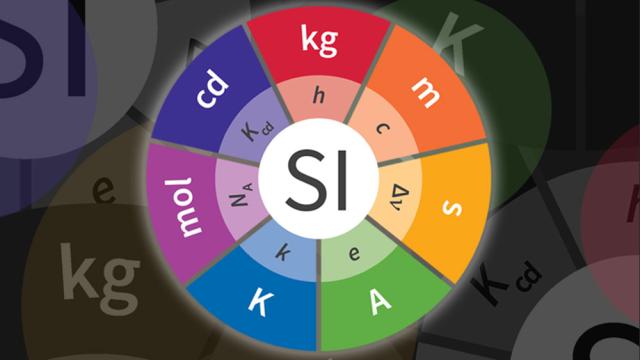
The modern metric system—known as the International System of Units, or SI—is a model of consistency and logic. But in some cases, the logic seems to break down.
In this article, we’ll explore some of these quirks and why they (mostly) make sense at the end of the day (or approximately 86,400…

Peter Chhim, V. Manohar
Most quality professionals have experienced this moment. A process improvement initiative is completed. Procedures are updated, the team is trained, and for a period of time everything works exactly as intended. The process runs smoothly, and the problem appears to be solved. Then, gradually, small…
ISO
(ISO: Geneva) -- Sustainability claims are everywhere. From recycled plastics and responsibly sourced fibers to renewable fuels and low-carbon materials, companies increasingly promise products with specific environmental or social characteristics.
But in complex global supply chains, proving…

Mike King, Massimo Franza
‘This product isn’t approved to be imported into this market,” says a customs official while reviewing the importation documentation.
Local quality and regulatory teams are quickly brought into the conversation and see that the product’s registration has been valid for several years, and no local…

Greg Rankin
For decades, the process industries have relied on layers of protection to prevent hazardous events. When risk reduction requirements were high, safety instrumented systems (SIS), governed by standards such as IEC/ISA 61511, provided a clear framework for design, operation, and life-cycle…

Lexi Sharkov
Validating AI software makes most quality teams uneasy.
Their unease is not unjustified. The new Annex 22 provides a framework for AI use, but the guidance remains in draft. Most quality teams still have questions, especially around validation.
Why? Quality teams are trained to validate systems…

Etienne Nichols
In the medical device industry, compliance isn’t a pop quiz. The U.S. Food and Drug Administration (FDA) has given you all the answers to the test in the form of a regulation: 21 CFR Part 820. That doesn’t mean it’s easy to ace the test. But you now have all the resources you need to pass.
What…

NIST
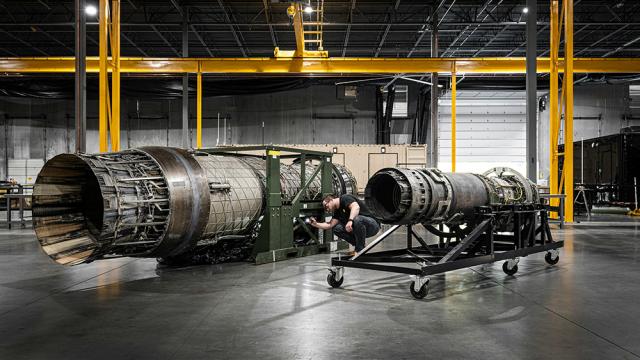
Wrapped snugly in a custom container, seven carefully chosen materials left Earth on Aug. 24, 2025, traveling at 17,500 mph. Nestled at the top of a Falcon 9 rocket, house dust, freeze-dried human liver, and cholesterol joined four other scientific specimens to travel to the International Space…
Paige Orme, Maria DiBari
Capability maturity model integration (CMMI) is a process improvement framework required by many U.S. government contracts. If you’ve been through a CMMI appraisal in aerospace or federal contracting, you know there’s a typical pattern. Things look great on paper. Then the appraisal date gets…

Tzaferis Meleti
Let’s be honest. Conformity assessment has become dangerously comfortable. It’s familiar, structured, and predictable. It gives organizations a reassuring feeling of control because it produces clean documentation, tidy checklists, and audit reports that look professional. It also creates an…

Stephanie Ojeda
Integrating environmental, health, and safety (EHS) with quality management is no longer optional for manufacturers; it’s essential for achieving operational excellence, ensuring ISO compliance, and driving sustainable growth. Traditionally, EHS management and quality management systems (QMS)…

ISO
Data are the backbone of our digital world. From healthcare to finance, and from government agencies to private businesses, organizations everywhere rely on vast amounts of data to function effectively.
It’s not just businesses that generate data. We all leave digital trails through our…