Content by Donald J. Wheeler

Mon, 04/20/2026 - 12:03
The way we think about our process will shape the way we collect, analyze, and interpret our data when things go wrong. This in turn will shape the actions taken and the results obtained. In this column, we look at an example of the difference…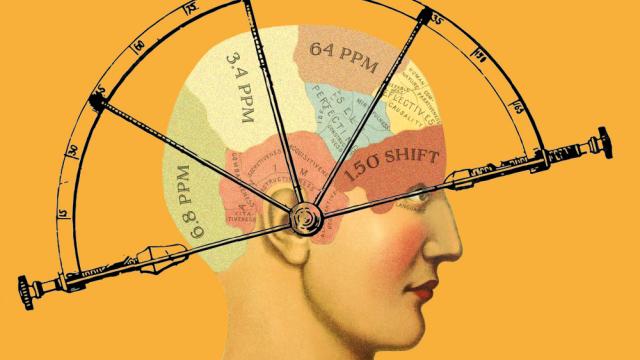
Thu, 03/26/2026 - 12:03
Many practitioners have been taught to describe a process using sigma levels. Yet these levels are commonly misinterpreted. This article will help you to understand the problem and learn more appropriate ways of describing your process.
In the days…
Tue, 02/24/2026 - 12:03
Most data in business and industry belong to the category known as observational data. These data are the voice of your processes because they are the result of ordinary operations rather than an experiment.
Because the purpose of analysis is…
Thu, 01/22/2026 - 12:02
Performance indexes use the global standard deviation statistic to describe the past. Capability indexes use a within-subgroup measure of dispersion to characterize the process potential. However, some within-subgroup measures are better than others…
Mon, 12/08/2025 - 12:03
One of the principles for understanding data is that while some data contain signals, all data contain noise. Therefore, before you can detect the signals you’ll have to filter out the noise. This act of filtration is the essence of all data…
Mon, 10/20/2025 - 12:03
When administrative and managerial data are placed on an XmR chart, the first reaction will frequently be that the limits are far too wide: “We have to react before we get to that limit.”
So what are we to do when this happens? Are the limits…
Wed, 09/17/2025 - 12:03
Everybody wants to have good measurements. To this end, many recommend a regular schedule of recalibration. While this sounds reasonable, it can actually degrade the quality of the measurements.
The key to getting the most out of a measurement…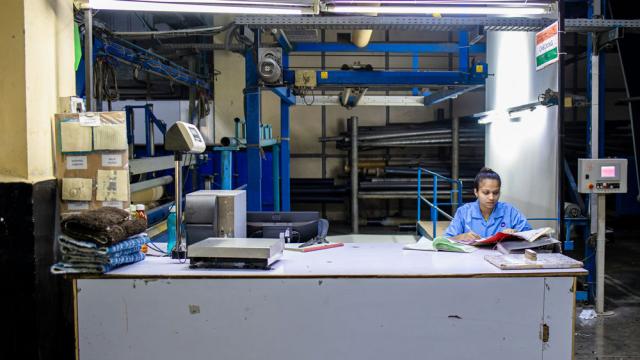
Mon, 08/18/2025 - 12:03
The engineer came into the statistician’s office and asked, “How can I compare a couple of averages? I have 50 values from each machine and want to compare the machines.”
The statistician answered, “That’s easy. We can use a two-sample t-test.”
“…
Mon, 07/21/2025 - 12:03
In statistics class we learn that we can reduce the uncertainty in our estimates by using more and more data. This effect has been called the “law of large numbers” and is one of the primary ideas behind the various big data techniques that are…
Mon, 06/16/2025 - 12:03
For many hundreds of years, “If it ain’t broke, don’t fix it” has summarized the predominant approach to process operation. From the physician’s admonition to do no harm, to the slightly more positive aphorism that the squeaky wheel gets the grease…