|
 |
|
Two large manufacturers and a small manufacturer have received the 1998 Malcolm Baldrige National Quality Award. The 1998 winners are Boeing Airlift and Tanker Programs of Long Beach, California; Solar Turbines Inc. of San Diego; and Dallas-based Texas Nameplate Co. Inc. "As America's standard for business excellence, the Baldrige Award has become a driving force in helping U.S. firms achieve leadership in the world's competitive marketplace," said President Clinton, who-along with Commerce Secretary William M. Daley-announced the awards November 17.
A&T's quality achievements are due, in part, to a process-based management system that has improved overall performance for its 50 key processes. From 1994 to 1998, performance on key quality measures improved by 50 percent, cycle time was cut by more than 80 percent and efficiency improved by more than 70 percent. Since 1994, the company's net assets have improved by a factor of seven, with a three-fold improvement on return on sales. Since 1992, A&T has reduced rework and repair time on the C-17 by 54 percent. And over the past three years, A&T has delivered all C-17s on time and according to contract specifications. The company places a high value on employee empowerment and involvement, using self-directed and functional teams to help improve productivity.
Solar Turbines' quality success derives, in no small part, from its focus on employees; annual surveys show rising levels of employee satisfaction. The company allows employees closest to the work to design, manage and improve work systems and processes. Employees receive incentive payouts when their efforts improve company performance. Solar has 6,200 employees in 15 U.S. locations, with the rest in 23 foreign locations. The company is one of the 50 largest U.S. exporters, with 75 percent of its $1.3 billion in revenues coming from exports.
TNC uses a wide range of listening and learning strategies to capture information from former, current and potential customers. An annual independent, third-party survey shows TNC's customers consistently give the company an "excellent" rating in 12 key business areas, including quality product, reliable performance and overall satisfaction. The company exhibits a strong commitment to its employees, which has resulted in employees rating the company high in key areas including fair pay, job content satisfaction and career development. To ensure employee safety, all workers receive safety training. TNC has customers in all 50 states and around the world, in countries including Canada, Mexico, Singapore, Turkey, Saudi Arabia and Holland. With 66 employees, TNC is the smallest company to receive the Baldrige Award. The company has two sites in Dallas. In 1996, TNC received the Texas Quality Award.
One of the world's oldest gastronomic crazes may soon join the ranks of ISO 9000-registered products. Italy's nonprofit standards-writing institute, the Nazionale Italiano di Unificaziano (UNI), has created a pizza quality assurance system that defines "True Neapolitan Pizza." The norm is currently waiting for the International Organization for Standardization's approval. In Italy, pizza is serious business. Carlo Mangoni di Santo Stefano, a University of Naples professor, assembled a 19-person team to carry out three years of intensive scientific research on pizzas and their ingredients, and interview hundreds of pizza makers in Naples and the surrounding area. The team compiled the data on which UNI based its norm for the wildly varying repast. The norm outlines the complex process necessary to create an authentic Neapolitan pizza. It spells out everything from the kinds of wheat flour used, to the tomatoes, mozzarella cheese, olive oil, herbs and spices necessary for the right culinary composition. The norm even spells out the procedure for kneading the dough and the subsequent steps for letting it rise properly. Because pizza's appeal extends far beyond Italy, ISO 9002 registration will help ensure that quality pies find their way to European tables. An estimated 600 Italian frozen pizza producing and supplying companies are preparing to become ISO 9002-registered. But, first, the norm has to be accepted by the existing culture of the pizza industry, where it promises to challenge traditional attitudes, including how managers evaluate performance. However, the norm is expected to improve the image of pizza makers and lend them a competitive advantage in a highly competitive market. -contributed by Italian correspondent Virginia Shuey Vergani Japanese Town Pursues ISO 14000 Those involved with ISO 14000 are many and varied-they include major manufacturers, small suppliers and government agencies. But a less likely candidate is a town. In early 1998, Shiroi became the first Japanese municipality to receive ISO 14001 registration. Shiroi's environmental management system resulted from a general planning agenda, issued in 1996. In the 1960s, Shiroi-which has 50,000 residents and lies 30 km from Tokyo-began to experience rapid development as a result of development of agricultural land and its close proximity to Tokyo. "Shiroi Town respects the purpose of ISO 14001 and wishes to play a leading role in the protection of the global environment," says Noriaki Nakamura, Shiroi Town's mayor. Shiroi's environmental objectives include using recycled paper; preventing water, soil and air pollution; and using fuel and energy more efficiently. The administration intends to include environmental considerations in future town plans, and introduce an EMS approach into administration-managed operations. Reprinted with permission of ISO 9000 News, September/ October 1998.
As the current demand for qualified automotive and diesel technicians outpaces the supply, many companies face having too much to do and not enough hands to do it. One company facing this shortage took a unique route to solving the problem. Butler Fleet Services of Montvale, New Jersey, a leading provider of fleet maintenance and management services, and the first company of its kind in North America to receive ISO 9002 certification, decided to create its own supply of skilled technicians. To do so, it developed the Butler Technician Diploma Program. "To continue to deliver superior quality and satisfy the expectations of our customers, we need to take action in response to the diminishing supply of trained technicians," says Jim Von Bampus, Butler's senior vice president and general manager. "The Butler Technician Diploma Program will provide us with a pool of technicians prepared to identify potential customer problems, and implement preventive and corrective action measures." Butler developed the diploma program through a partnership with Denver Automotive and Diesel College. Students have a choice of three diploma options: automotive, diesel and cryogenic technologies. Each program consists of a variety of accredited courses, taught by DADC's ASE-certified instructors using state-of-the-art equipment, to train students in vehicle performance and driveability. Each course provides hands-on training for developing specific skills Butler technicians need. "All the instructors are top-notch; they break things down so that you can understand them," says Roland Strickland, a recent graduate in Automotive and Applied Occupational Studies and Hydraulics, who will soon begin working for Butler at a Connecticut facility. "Working in the field while attending school reinforced what I learned." For more information, contact Ken Palmer of Butler Fleet Services at telephone (817) 429-8725. RAB Clarifies Conflict-of-Interest Position
The document's main points include:
Advisory No. 4 further defines-but doesn't change or modify-the requirements of ISO/IEC Guide 62:1996, the IAF Guidance on Application of ISO/IEC Guide 62:1996 and the ANSI-RAB NAP accreditation criteria R1.2 (QMS) and E3.1 (EMS) with regard to confidentiality, objectivity or impartiality as they apply to ANSI-RAB NAP-accredited registrars. For more information, contact RAB at telephone (800) 248-1946 or visit the RAB Web site at www.rabnet.com .
The Office of Naval Research, based in College Park, Maryland, has received an Innovations in American Government Award for its Best Manufacturing Practices Program. Administered by Harvard University's JFK School of Government and the Council for Excellence in Government, the Innovations in American Government Awards recognize outstanding, innovative government programs at the federal, state and local levels. The ONR's Best Manufacturing Practices Program began in 1985, when the U.S. Navy decided to address the extremes in the quality of goods and services supplied by its contractors. In doing so, the Navy realized that some suppliers faced manufacturing problems that other suppliers had solved. The solution-improve quality and reliability by asking contractors to share their information and experience. Since then, the program has helped small, medium and large organizations-throughout industry, government and academia-develop products and services. Some of the major companies BMP has worked with include Raytheon, Polaroid, Boeing and Northrop-Grumman. Based on its work, the BMP has created the Program Manager's WorkStation. Containing 3,000 validated practices, the PMWS is a free suite of tools available on the BMP's Web site, www.bmpcoe.org , which receives more than 7,000 queries daily. "It's an honor to have the BMP Program recognized as a model program for excellence in government," says Ernie Renner, BMP Program director. "The award has proven that, with dedication and creativity, a small program can have a major impact on American industry and the consumer." As part of the award, the ONR will receive a $100,000 grant to be used toward replicating its program in other areas and increasing awareness of the program. For more information, contact Ernie Renner at the BMP Center of Excellence, telephone (800) 789-4267.
The Chinese are eager to learn about quality processes and management, and the West needs to pay close attention, says quality notable Philip Crosby. Crosby, who recently visited China to attend the third annual Quality Control Conference in Shanghai, also visited several Chinese companies and factories. During visits to manufacturing plants, Crosby was impressed with the cleanliness of the facilities and the modern, well-maintained machinery. However, their quality operation is right out of the 1960s, he notes. "They don't clearly understand the relationship between the quality department and the operating functions," explains Crosby. Chinese managers don't understand their role in making quality an integral part of daily life, asserts Crosby. "They have been led to believe that ISO 9000 provides all that is necessary for quality management," he reports. "The Chinese senior executives I met felt helpless in dealing with the quality issue. Their quality professionals don't speak to them in an understandable language." However, the Chinese are trying very hard to establish a modern society, notes Crosby. "These are very resourceful and entrepreneurial people," he says. "I was pleased that they know there's a difference between quality control, quality management and quality assurance." |
|
| [QD Online] [Articles] [Columnists] [Departments] [News] [Ads/Links] |
| [Industry News] |
|
|


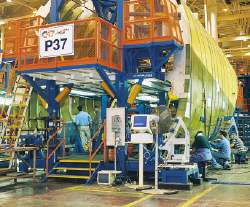 Boeing Airlift and Tanker Programs-A unit of Boeing Co., Boeing Airlift and Tanker Programs (known as A&T) designs, manufactures and supports C-17, C-32 and C-40 military aircraft. A&T employs 8,700 people at facilities and Air Force bases around the United States. The company's 1997 sales exceeded $2 billion.
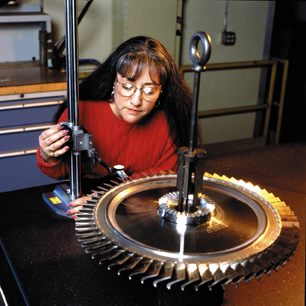 Solar Turbines Inc.-A wholly owned subsidiary of Caterpillar Inc., Solar Turbines designs, manufactures, markets and services industrial gas turbine engines for power generation, natural gas compression and transmission, and pumping systems. The company provides full-service support for all products, including financing, installation and operation. Its new product introduction process is a best-in-industry, systematic approach to designing new and modified products, resulting in a 43-percent reduction in design cycle time.
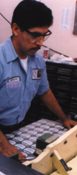
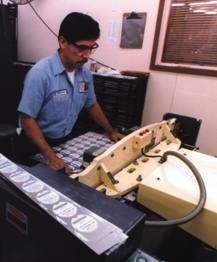 Texas Nameplate Co. Inc.-Founded in 1946, TNC manufactures and sells identification and information labels used on a variety of products, including oil field equipment, truck and trailer vehicles, and electronic and computer equipment. The company's manufacturing techniques include chemical etching, photo engraving and screen printing.
 For the past year, the National Accreditation Program Councils and the Registrar Accreditation Board have been considering revisions to ANSI-RAB NAP Advisory No. 4. The revised document clarifies RAB's position on the relationship between training and consulting, and establishes limitations on preassessments in order to avoid conflicts of interest.
 Consulting, or the giving of advice, by a registrar itself is a conflict of interest.