All Features

Rebecca Jacobson
To many people, a measurement sounds mundane, like marking ticks on a ruler or reading the line on a thermometer. It’s a piece of data. And they tend to think that improved measurements look like finer and finer ticks on a ruler—which doesn’t seem very exciting.
But making new measurements is more…

UC Berkeley NewsCenter
High-power laser pulses focused to small spots to reach incredible intensities enable a variety of applications, ranging from scientific research to industry and medicine. At the Berkeley Lab Laser Accelerator (BELLA) Center, for instance, intensity is key to building particle accelerators…
Hexagon Manufacturing Intelligence
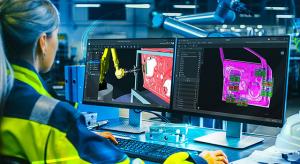
Hexagon’s Manufacturing Intelligence division, which supplies smart manufacturing technologies to giants from Volkswagen to Boeing, has unveiled HxGN Robotic Automation, pioneering robotic programming and control software that enables nonspecialist quality professionals to program industrial robots…

Emily Newton
Electric vehicles (EVs) are becoming more popular. The consumers interested in buying them generally want to know answers to questions such as: Is the car’s battery an explosion or fire risk? Will its useful life match or exceed the vehicle’s? Will the battery charge as fast as promised? Can it…

Shaina Warner, Anne Corning
Metrology is “the science of measurement, embracing both experimental and theoretical determinations at any level of uncertainty in any field of science and technology,” as defined by the International Bureau of Weights and Measures (BIPM).
Display metrology means using a scientific approach to…

Dirk Dusharme @ Quality Digest
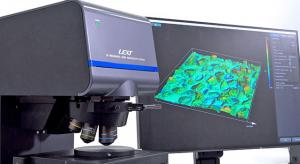
In any lab setting, bench space is limited. Between samples, notebooks, laptops, and other various supplies, it can be hard to find a place to put your test or measurement equipment.
If you use microscopes in your daily inspection work, the need to use two systems to look at one sample compounds…
Ryan E. Day
Manufacturing is a very competitive business where high-quality products are expected. And some clients require extremely tight surface measurement tolerances, so being competitive means investing in tools that can satisfy customer requirements.
The confocal advantage
Submicron 3D observation and…
Bryan Christiansen
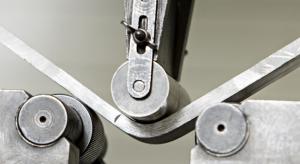
A lot of thought goes into building reliable assets. Extensive testing is a part of the process that has to be done to estimate the durability of machines, materials, and components. The testing can be done destructively or nondestructively.
In this article, we take a deep dive into the various…
Joe Chew, Jeroen van Tilborg
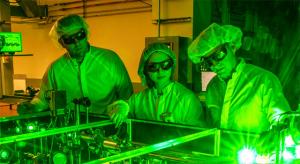
The Berkeley Lab Laser Accelerator (BELLA) Center at the Department of Energy’s Lawrence Berkeley National Laboratory (Berkeley Lab) has developed and tested an innovative optical system to precisely measure and control the position and pointing angle of high-power laser beams with unprecedented…

NVision Inc.
NVision’s 3D laser and computed tomography (CT) scanning services are helping RedBone, a manufacturer of hand-crafted goose calls, get its unique products to customers faster, enabling the Elton, Louisiana, company to significantly expand its output.
After scanning two key components of a call—the…
Nate Serafino
Industrial X-ray and computed tomography (CT) for nondestructive testing are rapidly expanding, with new applications and inspection systems emerging all the time. With so many choices available, it is critical to match the right technology with your individual inspection goals. Understanding the…
Bryan Christiansen
Testing is an integral part of equipment maintenance. It must be carried out to evaluate the materials, components, design, or structure of mechanical components. Based on the state of the tested component after the testing is done, the procedures used can be classified under destructive testing or…
William A. Levinson
Part one of this article showed that it is possible, by means of a Visual Basic for Applications program in Microsoft Excel, to calculate the fraction of in-specification product that is rejected by a non-capable gage, as well as the fraction of nonconforming product that is accepted. This…
Raghava Kashyapa
Bearings are important components of mechanical equipment. They are specifically designed to convert the direct friction from parts in relative rotation into rolling friction or sliding friction of the bearing. As a result, bearings are extremely important in reducing the friction coefficient and…
Hari Polu
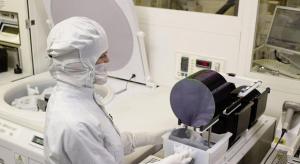
Manufacturers of high-end semiconductor electronic products used in consumer, industrial, and military applications have long relied on precise testing methodologies to identify the location of defects such as voids, cracks, and the delamination of different layers within a microelectronic device,…

Emily Newton
Effective equipment testing is essential for manufacturers of industrial equipment and end-users. Without testing, defects and damage can shorten the life span of equipment, cause unplanned downtime, and reduce the quality of finished goods.
This is especially true for businesses in sectors like…
William A. Levinson
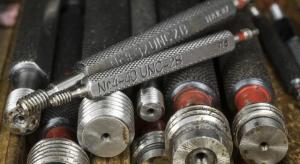
The first part of this series introduced measurement systems analysis for attribute data, or attribute agreement analysis. AIAG1 provides a comprehensive overview, and Jd Marhevko2 has done an outstanding job of extending it to judgment inspections as well as go/no-go gages. Part two will cover the…

Suneel Kumar, Sreelal Sreedhar
The word “aptitude” is sometimes misused to mean ability or achievement. There is, however, a real and meaningful difference between the three words. Understanding the relationship between aptitude and ability can be a significant factor for your inspection operators.
A basic description of the…

James Bossert
When we talk about measurement system analysis (MSA), people tend to focus on attribute agreement analysis because it is usually quicker and easier to do than a gauge repeatability and reproducibility (gauge R&R) study. This article is a review of the fundamentals for gauge R&R to remind us…
William A. Levinson
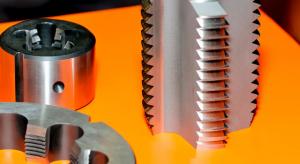
Measurement systems analysis (MSA) for attributes, or attribute agreement analysis, is a lot like eating broccoli or Brussels sprouts. We must often do things we don't like because they are necessary or good for us. While IATF 16949:2016, Clause 7.1.5.1.1—“Measurement systems analysis,” does not…

Hexagon Manufacturing Intelligence
A 3D-printed replica of Michelangelo’s famous David sculpture, reproduced with the use of scanning technology by Hexagon, was unveiled during a ceremony at the Italy Pavilion at Expo 2020 in Dubai.
The event was attended by the Italian Minister of Foreign Affairs and International Cooperation,…

Wayland Additive
Metal additive manufacturing (AM) is a process with demanding requirements for in-process material management, specifically with regard to the use of powdered metals. The Calibur3 system from Wayland Additive, enabled by the NeuBeam process, not only redefines how the electron beam (eBeam) process…
Alessandro Messina
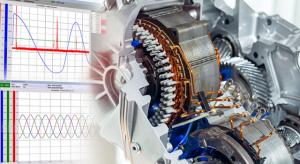
A challenge that occurs with the latest generation of electric motors is optimization of the component manufacturing in terms of efficiency, quality, and costs.
Electric motors are a critical factor in the unprecedented global growth trend toward e-mobility. This fast diffusion of electric…

Sabine Terrasi
In yacht and boat building, the most commonly used materials are composites. By combining the positive properties of at least two components, composites often have outstanding features—some of them even specially adapted to their respective areas of application.
It is hardly surprising that they…
George Schuetz
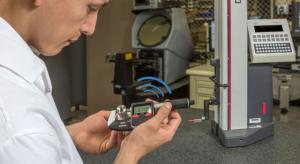
Inspection is often subject to the management team’s efforts at cost control or cost containment, as is the case with most other areas in modern manufacturing operations. Although it’s sound business judgement to maximize the value of every dollar, it also means that hard choices must be made when…